
The European Union is a significant trading region in the global economy, supported by advanced logistics infrastructure, extensive maritime connectivity, developed manufacturing capabilities, and strong integration across the international supply chain. The region connects different exporters, importers, manufacturers and distributors across European and global markets. Europe Bill of Lading Data are considered valuable tool that supports the authorities with active intelligence for companies looking to identify market opportunities, evaluate trade relationships, understand product movement and develop effective international expansion strategies.
The availability of detailed trade intelligence enables businesses to examine shipment activity, identify active buyers and suppliers, monitor competitor movements, and evaluate the sourcing markets. The Bill of Lading information provides visibility into international shipments, along with import, export, and global trade data. Overall, it helps businesses with analysis of the trade values, product categories, countries of origin, and destination ports.
THE SIGNIFICANT ROLE OF EUROPE IN GLOBAL TRADE
The European Union plays a central role in international commerce because of its strategic geographical location, developed infrastructure, large consumer market, and strong industrial base. European economies are mainly involved in pharmaceuticals, chemicals, automobiles, machinery, electronics, and energy essentials. The major European ports and logistics hubs overall facilitate the movement of goods between Europe, Asia, North America, the Middle East and other international markets. The maritime shipping, road transportation, rail networks, inland waterways and distribution centres support the region’s extensive supply chain ecosystem. Europe Bill of Lading Data gives a proper overview to businesses regarding the movement of shipments through international trade channels.
The companies will be able to examine the shipment description, consignee and shipper information with an understanding of the products moved between different markets. Europe Import Export Data will add a different layer of trade information over the specific region lookup, with evaluation of import requirements, export opportunities, trade partners, product categories, and market demand rate. The companies will be able to combine the latest insights for creating targeted market entry and sourcing strategies.
WHAT IS THE EUROPE BILL OF LADING DATA?
Europe Bill of Lading Data is a property representation of the shipment and transportation data mainly linked with the cargo movements of the European market. The Bill of Lading is a shipping document that promotes maritime transportation and contains information regarding the shipment cargo, shipper, consignee, carrier, ports, and transportation details.
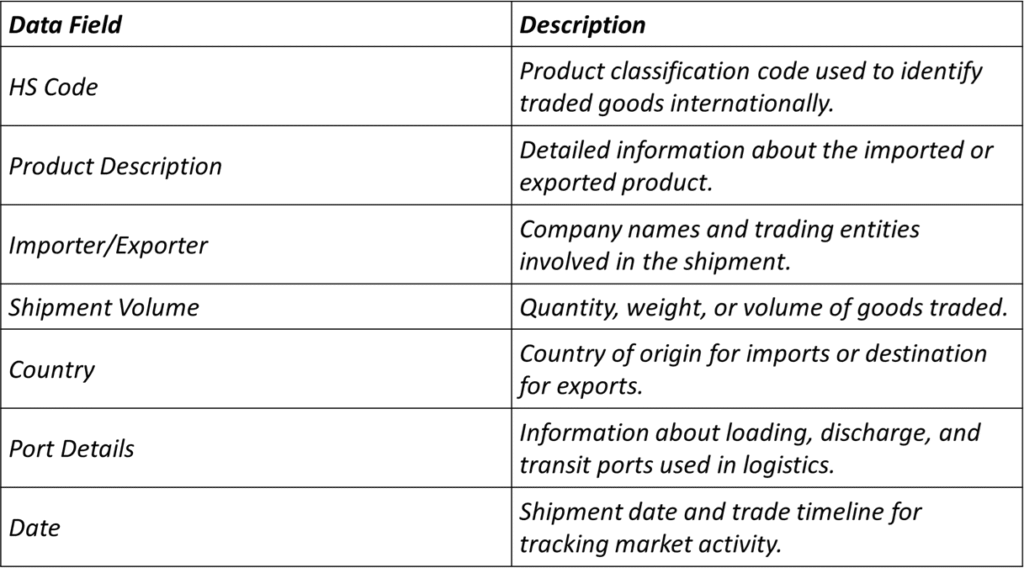
The businesses’ structured Bill of Lading intelligence will help the authorities provide visibility into commercial shipment activity. The available data set will include importer or consignee names, exporter or shipper names, product description, and quantities. The companies using the intelligence will help businesses identify participation in international trade through examination of the recurring shipment patterns. The data will be particularly valuable for manufacturers, exporters, suppliers, and logistics companies.
WHAT DETAILS ARE INCLUDED IN THE EUROPE BILL OF LADING DATA?
THE COMPREHENSIVE OVERVIEW OF EUROPE IMPORT EXPORT DATA
Europe import export data is a broader trade overview of the international merchandise trade across the European market. It helps businesses get proper analysis of the global import export data with analysis of imported and exported products, trade partners, shipment activity, product demand, and market movements. European imports will mainly include pharmaceutical chemicals, machinery, electronics, automobiles, energy products, and agricultural commodities.
The diversity of the European economy will create opportunities for trade for suppliers operating across multiple product categories. The European countries will have strong capabilities in pharmaceuticals, automobiles, machinery, chemicals, aerospace products, electrical equipment, food products, precision instruments, and industrial goods. The businesses will be able to use the European export data for evaluation of destination markets and identification of countries.
THE ROLE OF GLOBAL BILL OF LADING DATA IN INTERNATIONAL BUSINESS
Global Bill of Lading Data provides detailed information to businesses for intelligence across international markets. It enables companies to study the movement of goods between countries and relationships, and collaboration in different regions. Businesses will be able to expand their understanding of international trade with global shipment intelligence for identifying companies that regularly import specific products.
The exporters will be able to examine shipment activity along with sourcing companies’ identification of suppliers serving particular markets. The Global Bill of Lading Data will encompass competitor monitoring. The companies trying to upgrade will be able to analyse the shipment frequency, product description, and origin countries for understanding the international activities of competitors.
HOW DOES GLOBAL TRADE DATA SUPPORT BUSINESS GROWTH?
- Identification of buyers and suppliers – Global trade intelligence will help companies get a proper identification of active buyers and suppliers. Businesses trying to update their database can refer to importer and exporter activities for the creation of targeted prospect lists.
- Competitor shipment monitoring – The companies will be able to monitor the international shipment activities with evaluation of the product categories, sourcing countries, and destination markets. It will support the competitive positioning and the market entry decisions.
- Market demand analysis – The historical import and export activities will help the businesses identify products with strong and increasing demand rates. The companies will be able to compare the trade trends across different regions for determination of expansion opportunities.
- Supplier and sourcing analysis – The trade data will help businesses evaluate sourcing markets with identification of alternative suppliers. The companies will be able to compare the countries based on shipment activity for existing commercial relationships.
THE EFFECTIVENESS OF EUROPE BILL OF LADING DATA FOR BUSINESS EXPANSION
Europe Bill of Lading Data will provide detailed intelligence for businesses targeting the European Union. The dependence of the region on broad market statistics will help the authorities examine the actual shipment movements. The exporters will be able to understand the import of specific products in the European Union.
The manufacturers will use the information to understand the sourcing relationship along with the discovery of potential distributors. The logistics providers will be able to evaluate the shipping activity across ports and roads. The market researchers can use the shipment information for study of the product flows and trade relationships. The businesses can use historical shipment information for identification of recurring importers and suppliers.
THE FUTURE TRADE OUTLOOK OF EUROPE AND GLOBAL TRADE DATA
The future of the European Union will be mainly backed up by supply chain diversification, technological development, sustainability requirements, manufacturing transformation, and digitalization. Pharmaceuticals, advanced machinery, electronics, and automobiles will remain important areas of international commercial connectivity on a global scale.
The continuous development of the digital supply chain will create greater opportunities of trade for companies looking for analysis of shipment and trade information effectively. The Europe Bill of Lading Data, Europe Import Export Data, and Global Trade Data will maintain valuable resources for businesses looking to improve international market strategies.
Conclusion
The European Union is one of the most important commercial regions, supported by the advanced logistics infrastructure, strong industrial capabilities, developed transportation network, and extensive connections. The European Union’s Bill of Lading Data will provide shipment-level intelligence and visibility into the cargo movements of the region. The understanding of the product demand, trade partners, and sourcing markets will update the destination countries’ information on specific data sets.
The Global Bill of Lading Data will extend the shipment intelligence across international markets while helping the companies identify potential buyers and suppliers. The Global Trade Data will provide a broader perspective on international commerce, supporting market research, sourcing decisions, competitive analysis, and business expansion. The companies will be able to use the reliable trade intelligence for making informed decisions and identifying emerging opportunities.
CTA
Trying to expand your international business opportunities in the European Union and the global market? You have come to the right platform here. Import Globals provides statistical analysis and trade updates on globally traded essentials: The Europe Bill of Lading Data, Europe Import Export Data, Global Bill of Lading Data, and Global Trade Data overall, it helps companies gain a proper understanding of sourcing markets. The progressive traders can identify the potential buyers and suppliers along with analysis of product demand and monitoring of international trade movement. Subscribe to www.importglobals.com or drop an email at info@importglobals.com for detailed updates on European and global trade data to drive your business growth in a regular manner.
FAQ’s
Que –What is the Europe Bill of Lading Data?
Ans –The Europe Bill of Lading Data is shipment-level information associated with international cargo movements that mainly include importer, exporter, product, and quantities of trade.
Que –How does Europe import export data support business growth?
Ans -Europe import export data supports business growth via proper identification of buyers, supplier analysis, analysis of market demand, and development of effective market expansion strategies.
Que –What information is available in Global Trade Data?
Ans -Global Trade Datacovers Importer names, Exporter names, Shipment date, HS Code, Product Details, quantity, values, pricing information, origin country, importing country & port details.
Que –How frequently is the Global Trade Data updated?
Ans -Global Trade Data is updated on a monthly basis.
Que –Where can one get detailed intelligence on Global Trade Data?
Ans –Visit www.importglobals.com or drop an email at info@importglobals.com for detailed updates on Europe and global trade data.